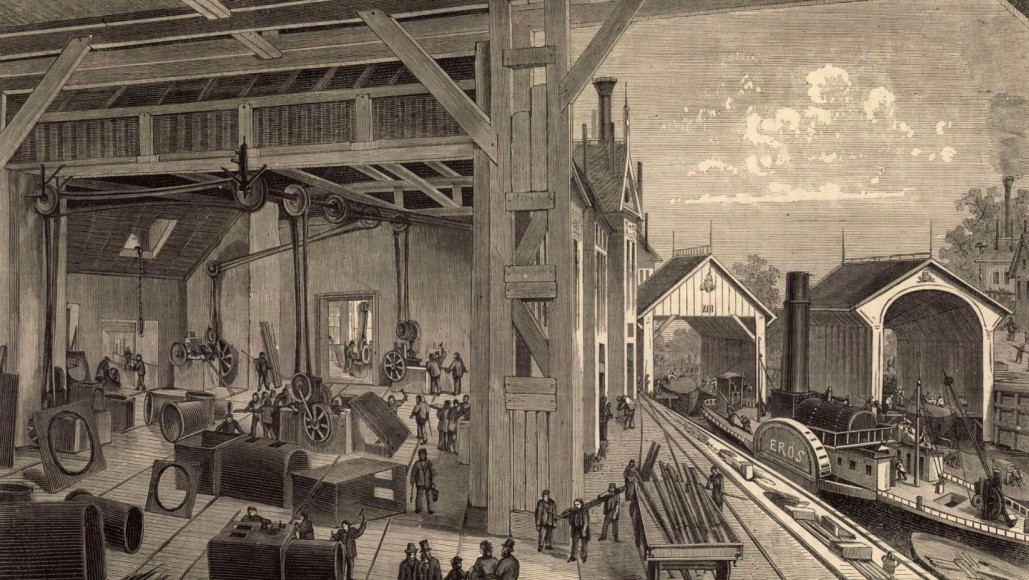
4. The Factory As A Spectacle: The Beginnings of Depicting the Óbuda Shipyard – Lecture
Location:
Budapest, 1033 Budapest, Fő tér 2. Esernyős Galéria Kamara teremDates
2025.10.11 10:30 - 11:30
Lecture by design analyst Hanna Barbara Zalka at the Óbuda Museum. In his 1859 publication “Budapest and Its Surroundings”, János Hunfalvy wrote: “Many Roman relics are still found in and around Óbuda […] However, the greatest attraction of Óbuda is a modern creation, namely the shipyard, located on a small island separated from the shore by a narrow branch of the Danube.” From the second half of the 19th century, alongside the development of industry, demand grew for the visual representation of industrial facilities. Beyond their art-historical significance, factory depictions reveal much about the economic and technological development of the period, as well as social structures and the situation of the working class. The Óbuda Shipyard enjoyed particular popularity: it frequently appeared in illustrated journals and educational publications, which not only highlighted its economic importance but also described it as a spectacle.
About the Organiser:
The Óbuda Museum is located in the former Zichy Castle, a protected historic monument, on the cobblestoned, old-world Main Square of Óbuda. Since its foundation in 1973, its principal mission has been the collection and preservation of artefacts from old Óbuda, as well as from Békásmegyer and Csillaghegy, which were annexed to the district in 1950. Its urban history exhibition presents a coherent picture of the settlement’s thousand-year history, from the Middle Ages to the regime change in 1989–90. The temporary exhibition “Anatomy of a Factory. The History of Our Óbuda Shipyard”, displayed across three different spaces, seeks to provide a comprehensive account of the shipyard’s past from local history, social history, industrial and technical perspectives. The true driving force of the Óbuda Shipyard was always its workers. Though the factory has permanently closed its doors, the stories live on as long as they are remembered. This is what the Óbuda Museum strives to achieve, in the hope that the exhibition will successfully revive the memory of the Óbuda Shipyard.